
Urban Flooding in Nairobi, Kenya: The Consequences of Fragmented Governance
19 Nov, 2026.
SYLVIA KINYANJUI

CityDiplomacy.org
Introduction
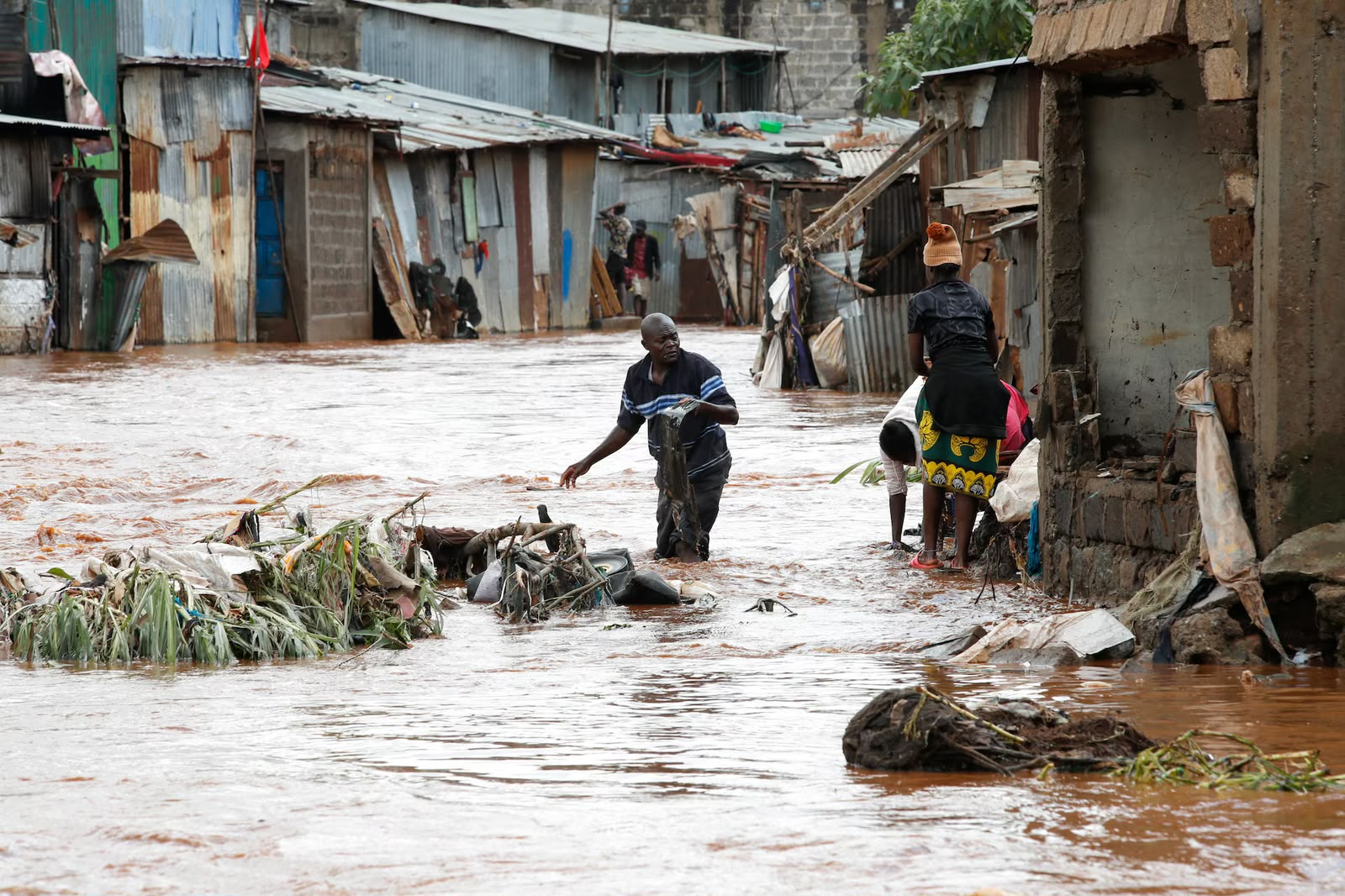
Each year, when the long or short rain arrives, Nairobi floods and each year, the Nairobi City County government absorbs the public blame for it. The pattern was evident in the March-May 2024 rainy season, which saw tens of thousands of households displaced, roads, bridges and schools destroyed, and again in March 2026, heavy rains resulted in the displacement of thousands of households and the death of dozens of people across the city (Mwangi et al., 2026). Criticism of Nairobi’s recurring floods often focuses on the county government’s perceived failure to prevent or respond to flooding. However, there lies a disconnect between responsibility and authority. The county government is expected to manage and mitigate flooding, yet it does not always possess the powers, budgetary control, or institutional mandate required to tackle the factors that contribute to it.
This article suggests that the flooding experienced in Nairobi is not solely as a result of heavy rainfall but is also shaped by governance structures, planning deficiencies and institutional gaps that contribute to the city’s flood vulnerability. Mandates to maintain drainage, regulate riparian land, restore rivers, manage solid waste, build trunk roads, predict and respond to weather events and coordinate disaster management are all spread across county departments, national road and water agencies, a nationally appointed river-basin commission, and the national disaster-management apparatus. None of these institutions has sole responsibility for flood management hence it is a responsibility shared across many bodies.
The talk is broken down into four sections. It first identifies institutions that share responsibility for functions related to floods in Nairobi. It then contextualizes this fragmentation within the theory of multilevel climate governance that views cities as the first line of action against climate change, even if they do not have the same authority as a state. It explores the slow-moving, cumulative infrastructural and land-use failures that lead to flood exposure. Then it turns to the constitutional fiscal constraint that encourages counties to spend more on the visible, event-driven response to flooding than on more routine maintenance. It ends with a conclusion that when responsibility and authority are separated, accountability is dispersed.
Context: The Institutional Landscape of Flood Risk in Nairobi
The Constitution of Kenya 2010 decentralized various parts of urban services to county governments, such as stormwater drainage, solid waste collection, and local development control. (Constitution of Kenya, 2010). However, in practice, a number of functions relevant to flooding are still assigned to national agencies, or cooperation between the county and national government is still in place. Mwangi et al (2026) stress that a combination of fragmented institutional coordination and lack of enforcement of land use regulation has heightened the city’s risk of flooding in informal settlements. The main institutions that have a role in flood outcomes are identified in Table 1, which is based on their statutory or gazetted functions.
| Institution | Institutional Level / Basis | Flood-Relevant Function |
|---|---|---|
| Nairobi City County Government | Devolved government (Fourth Schedule, Constitution of Kenya, 2010) | Local drainage maintenance, solid-waste collection, riparian-reserve by-laws, development approvals, county-level disaster response |
| Kenya Urban Roads Authority (KURA) | State corporation, national government | Urban road corridors and associated roadside drainage within Nairobi |
| Kenya National Highways Authority (KeNHA) | State corporation, national government | National trunk roads (e.g., Mombasa Road, Uhuru Highway) and their drainage |
| Kenya Rural Roads Authority (KeRRA) | State corporation, national government | Rural and peri-urban roads within the wider Nairobi metropolitan area |
| National Environment Management Authority (NEMA) | National government, established under EMCA No. 8 of 1999 | Environmental Impact Assessment approvals, wetland and riparian-zone enforcement, and development licensing |
| Water Resources Authority (WRA) | National government | Riparian-land pegging and clearance prior to construction along rivers |
| Nairobi Rivers Commission (NRC) | National government, Gazette Notice No. 14891 of 2022 | River-basin restoration, catchment protection, riparian rehabilitation, and coordination of river-corridor evictions |
| Nairobi City Water and Sewerage Company (NCWSC) | County-owned utility company | Sewer and combined stormwater infrastructure operation and maintenance |
| National Disaster Management Unit / Ministry of Interior and National Administration | National government, established in 2013 | National emergency coordination, disaster mapping, multi-agency response |
| National Police Service / Kenya Red Cross Society | National government / auxiliary humanitarian body | Search, rescue, and evacuation during flood events |
| Kenya Meteorological Department | National government | Rainfall forecasting and early-warning advisories |
| The National Treasury | National government | Approval of county borrowing guarantees, allocation of emergency and recovery financing |
This table reveals not only a long list of agencies but also the absence of a single point of accountability. Trunk roads are under KeNHA, urban roads under KURA, rural and peri-urban roads under KeRRA, trunk road environmental clearance before construction under the Water Resources Authority and environmental licensing and enforcement against illegal structures under NEMA. River restoration falls under the Nairobi Rivers Commission, established by a Presidential Gazette Notice in December 2022 and placed under the Executive Office. The county owns and manages sewerage and combined drainage assets, while the general coordination of disasters is handled by a national unit under the Ministry of Interior. Ten or more institutions each hold a sliver of the flood problem, while none holds the problem in its entirety.
Analytical Framework: Multilevel Climate Governance and Recognition without Authority
Fragmentation is conceptualized within the literature on multilevel climate governance. Betsill and Bulkeley (2006) argue that a one-size-fits-all approach to governance is neither possible nor suitable for climate change. Governance takes place across multiple levels through processes and institutions, with actors having quite different forms of and levels of authority. Their work on ‘urban politics’ of climate change further reveals that municipal climate action is more a product of a process of contestation and overlapping institutional relationships rather than a clear hierarchy from international to national to local governments. Therefore, the institution closest to a problem in terms of proximity is not necessarily the institution with the power or resources to act. (Bulkeley & Betsill, 2005).
This asymmetry is more clearly pronounced in recent policy literature. While cities are exposed to climate change uniquely, their ability to take decisive action is hampered by the lack of their own ability to do so especially in countries, where local governments often have limited authority and resources to take the lead when it comes to substantive climate action. In most countries, national governments are and remain the primary counterparts for development and financing partnerships (UN-Habitat, 2024). This creates a pattern of recognition without authority whereby cities are recognized as the level of government closest to climate impacts and are expected to respond, while the powers, budgets, and enforcement instruments required to act remain elsewhere.
Nairobi is a good example of this pattern, as the effects are immediate and visible. At street level, the county government has been publicly recognized as the government responsible for flood response yet riparian enforcement, trunk-road drainage, river restoration and national disaster coordination are statutory duties of other separate national bodies. This creates a situation where the government closest to the impact does not necessarily have control over all the factors that produce them. This also reflects the wider governance challenge facing cities where global climate negotiations debate whether cities should have a formal seat in multilateral decision-making. Nairobi is therefore not an abstract city, but a city where the frontlines of climate change can be seen and experienced in practice through the recurring reality of flooding.
These tensions become especially visible when examining attempts to move beyond raw extraction toward industrialisation. In 2021, the province of Jujuy signed a Memorandum of Understanding (MOU) with Ganfeng exploring the possibility of establishing a local lithium-ion battery manufacturing plant. At the time, this was presented as a step toward integrating Argentina into higher-value segments of the global battery supply chain and the promise of development. Five years since then, nothing has happened: Ganfeng continues to rely on its existing manufacturing infrastructure in China, and no battery plant has been established in Jujuy (Treacy, 2025). However, this should not be surprising. China’s broader industrial strategy is precisely oriented toward consolidating its dominance in global value chains and securing control over critical minerals like lithium at the extraction stage, while retaining all downstream processing and manufacturing capacity at home (Treacy, 2025; Juste, 2024). Ganfeng’s reluctance to establish local production facilities is consistent with Beijing’s ambition to position Chinese firms as the principal actors in the global battery supply chain. In this context, the non-binding nature of the MOU functioned more as a political instrument that suited narrative questions in the short-term than as a genuine commitment to local industrialisation.
Finally, beyond the fiscal and industrial dimensions, it is necessary to consider the environmental and social costs, especially taking into consideration that the Puna region is water-intensive and its ecosystem is arid and quite fragile. In fact, several projects have raised serious concerns about impacts on brine aquifers, wetlands, and the water rights of indigenous communities (Licata, 2024). Even if community consultation processes are legally required under Argentinian law, local communities have been ignored or left aside from the discussions. For instance, in the Salar de Olaroz, transnational operations have actively exploited language barriers, failing to provide adequate information to local populations whose primary language is Quechua, thus bypassing genuine local consent (Licata, 2024). Highlighting this severe governance gap, Ganfeng Lithium recently received a remarkably low score of just 12.7 out of 100 from the World Benchmarking Alliance, exposing major shortcomings in transparency, social responsibility, and human rights practices (Treacy, 2025).
Taken together, these dynamics observed in the Argentine case show that when subnational diplomatic engagement collides with the logic of geoeconomic competition, the optimistic assumptions of that literature (in other words, that local actors can leverage international engagement for development, that formal authority translates into real bargaining power, that investment attraction and long-term planning can go hand in hand) start to break down. Even if provinces are not passive actors, they are operating in an environment that consistently rewards speed over strategy and short-term gains and immediate results over sustainable outcomes. In other words, the further subnational diplomacy moves into politically contested, resource-driven terrain, the more the cooperative, development-oriented image it projects gives way to something messier and considerably less empowering, and this trend seems to deepen even further in countries of the Global South.
Discussion: Cumulative and Slow-Moving Systemic Failures
Undersized and under-maintained drainage infrastructure
The drainage and sewerage systems for the city of Nairobi were designed for a much smaller city. Nairobi’s current population is over 5 million (Pulse Kenya, 2025), and according to the records of Nairobi City County, the city’s drainage network was designed to support a population of less than 500,000. In contrast, its sewerage network was laid in 1965 when Nairobi had approximately 350,000 residents. This is not a new phenomenon; it is a result of many years of urban growth with no corresponding increase in drainage capacity combined with failure to regularly desilt or maintain existing channels.
Riparian encroachment through approved and unapproved development
The second cumulative failure is with the approval of land use. Investigative reporting on the city’s flood history notes that when allowances are granted for increased plot ratios and increased ground coverage without the provision of stormwater, the additional load of stormwater is passed downstream (Nation, 2026). The World Resources Institute also attributes encroachment on riparian corridors and wetlands, as well as low enforcement of current land-use laws, to be a major contributor to flood exposure, especially in low-elevation informal settlements along the river corridors of Nairobi, Ngong, and Mathare (Mwangi et al., 2026). Kenyan law stipulates that developers must get clearance from the Water Resources Authority to develop plots adjoining a river, and to observe prescribed riparian distances. However, county officials have noted that these conditions are often not fulfilled, including in cases where developers were originally given clearance to build on the plots (People Daily, 2026a). It is therefore not a case of a single agency failing, rather a series of failures across several agencies.
Solid waste is converting an undersized system into a blocked one.
Solid waste management is the third failure contributing to Nairobi’s flood risk. Where some of the designed capacity in the drainage infrastructure is still available, channels are often blocked and unable to perform their intended function. Blockages in solid waste are identified in the brief produced by the World Resources Institute (WRI) as one of the main factors contributing to the increased flood risk in Nairobi, alongside other issues such as natural buffers and drainage (Mwangi et al., 2026). The removal of illegally dumped waste from stormwater drains is a problem that is repeated and reactive to the flood, as clearly noted in all reporting of County-led responses to flooding (Citizen Digital, 2026). A small system is a blocked system, and a blocked system will flood at a higher rainfall intensity than a well-maintained system would.
Meteorological events are not responsible for any of these three failures. These failures developed over years or decades, through administrative practice and decisions, issuance of permits, and the failure to plan for and maintenance infrastructure over time as detailed in Table 1. Together, these separate failures are experienced by residents as a single event: a flood.
The Fiscal Constraint: Article 212 and the Bias toward Event-Driven Response
This institutional disintegration has a constitutional financing constraint as its backbone. Under Article 212 of the Constitution of Kenya, a county government can only borrow money when the national government guarantees the money and the county assembly approves (Constitution of Kenya, 2010). The County Governments Act No.17 of 2012 stipulates that the county assembly must approve any borrowing in terms of Article 212. In reality, Nairobi City County has to rely on the national government for long-term funding for assets with multiple decades of useful life, such as drainage infrastructure. This is evident for instance, in the deliberations held in the Nairobi City County Assembly to refinance an existing loan facility (Nairobi City County Assembly, n.d.).
There is a predictable behavioral consequence to this constraint. Infrastructure projects such as trunk drains, culverts and river channel projects have a long lifespan but cannot be financed with independent county borrowing. The county’s annual operating budget is designed to focus on what can be planned and funded within a single budget cycle. More broadly, humanitarian-sector analysis of disaster response in Kenya sees a lack of fiscal autonomy and reliance on funding at the national level as hampering sub-national authorities’ capacity to respond quickly, while they are constitutionally tasked with a primary role in disaster preparedness and response (ODI Humanitarian Practice Network, 2026). The outcome is a structural imbalance in favor of event-based reaction to flooding such as emergency works, desilting and road repairs during and after a flood because these can be funded reactively and is politically ‘visible’ unlike the routine maintenance and long-term capital investment, which is less visible, more important and would reduce flood risk in the first place.
Discussion: Accountability in the Gap
Combined, the institutional map, the theoretical framework, and the fiscal constraint suggest a single condition: When responsibility and authority are separated, responsibility does not disappear from public discourse; it becomes dispersed across institutions. The Nairobi County Government is called upon every rainy season to explain and respond to flooding, yet many of the factors contributing to that flooding sit beyond its statutory mandate and financial capacity. These include limited ability to finance construction major capital works, undersized drainage system, decades of the approval of buildings built along the riverbanks, blocked drainage channels and a constitutional borrowing constraint that makes it difficult for the county to fund drainage projects independently. The relevant power holders at the national level (the National Environment Management Authority, the Nairobi Rivers Commission, the Water Resources Authority, KURA, and KeNHA) each hold responsibility for a part of the causal chain. No single institution is in a position, let alone the mandate, to be held responsible for the total effect.
This is in line with the multilevel climate governance literature, which recognizes cities are often where climate-related risks are experienced, without necessarily having the authority or independent financial means to manage those risks from end to end. The pattern identified In Nairobi is not a single pressing problem that needs to be solved by one intervention, but a recurring structural pattern of flood risk governance regularly experienced and anticipated by different institutions and a highly predictable consequence of the institutional division of labor for the functions associated with the flood risk.
Conclusion
Flooding in Nairobi City is often attributed to the intensity of the rain and at times to the failure of the government. The evidence presented in this article suggests a more complicated picture. There are at least ten county and national institutions that undertake functions related to the floods, but none of them has the authority to address the problem as a whole. This fragmentation is part of a wider international pattern where cities are increasingly identified as the frontlines of climate change but not necessarily granted the authority or resources to respond appropriately.
In Nairobi, this is reinforced by a constitutional fiscal constraint (Article 212) that limits the county governments’ ability to use county resources to independently finance long-lived drainage assets. This subsequently results in an imbalance towards visible, event-driven responses to drainage issues rather than regular maintenance. The outcome is not isolated emergency that can be solved after each rainfall event, but a recurring structural problem in which public responsibility for managing floods is handed to an institution that does not have sole authority or sufficient resources to do so each rainy season.
References
Betsill, M. M., & Bulkeley, H. (2006). Cities and the multilevel governance of global climate change. Global Governance, 12(2), 141–159. https://doi.org/10.1163/19426720-01202004
Bulkeley, H., & Betsill, M. (2005). Rethinking sustainable cities: Multilevel governance and the ‘urban’ politics of climate change. Environmental Politics, 14(1), 42–63. https://doi.org/10.1080/0964401042000310178
Citizen Digital. (2026, April 30). Nairobi County steps up flood response as heavy rains disrupt city infrastructure. https://citizen.digital/article/nairobi-county-steps-up-flood-response-as-heavy-rains-disrupt-city-infrastructure-n381762
Constitution of Kenya, 2010, art. 212 (Kenya). https://www.parliament.go.ke/sites/default/files/2023-03/The_Constitution_of_Kenya_2010.pdf
County Governments Act, No. 17 of 2012 (Kenya). https://www.parliament.go.ke/sites/default/files/2017-05/CountyGovernmentsAct_No17of2012_1.pdf
Mwangi, C. M., Mungai, O. K., Nduru, J. W., Samuel, W., Wanjohi-Opil, H. N., Munyambu, P., Mahendra, A., & Shrivastava, V. (2026). Flooding in Nairobi’s informal settlements: Advancing equitable and resilient solutions (Issue Brief). World Resources Institute. https://doi.org/10.46830/wriib.25.00024
Nairobi City County Assembly. (n.d.). Authority for refinancing the County’s KSh. 4.2 billion loan. https://nairobiassembly.go.ke/motion/authority-for-refinancing-countys-ksh-4-2-billion-loan/
Nairobi Rivers Commission. (n.d.). Our mandate. https://www.nrc.go.ke/our-mandate
Nation. (2026, March 9). From Ainsworth to Sakaja: How Nairobi built a flood disaster. Daily Nation. https://nation.africa/kenya/news/from-ainsworth-to-sakaja-how-nairobi-built-a-flood-disaster–5384850
ODI Humanitarian Practice Network. (2026, June 19). Crisis response reveals governance differences in Kenya. https://odihpn.org/en/publication/crisis-response-reveals-governance-differences-in-kenya/
People Daily. (2026a, May 5). Nairobi outlines mandatory rules before constructing on land near rivers. https://peopledaily.digital/news/nairobi-outlines-mandatory-rules-before-constructing-on-land-near-rivers
Pulse Kenya. (2025, November 26). Nairobi’s communities are turning rivers into battlegrounds for change. https://www.pulse.co.ke/story/nairobis-communities-turning-rivers-into-battleground-for-change-2025112111240180330
UN-Habitat. (2024). World Cities Report 2024: Cities and climate action. United Nations Human Settlements Program. https://unhabitat.org/wcr/